


The energy around women’s wellness is shifting. After years of schedules packed beyond capacity, digital demands that never stop, and the often invisible labor women carry at home and at work, the desire for deep rest has transformed into something much more profound: a need for renewal. Wellness travel is no longer about escaping life for a few days. If 2025 was the year women began reclaiming rest, then 2026 is the year we take ownership of deep, intentional wellbeing—the kind that goes beyond checking out for a weekend and instead invites us to fully check in with ourselves. In 2026, wellness travel is about reclaiming your rhythm, reconnecting to your body, and choosing environments that help you return home with more clarity, balance, and vitality than you left with.
The industry is responding with creativity and intention. Retreats are emerging that support women’s hormonal health. Resorts are integrating therapies that enhance brain function and longevity. Social wellness clubs are creating community around sauna culture and shared rituals. Iconic hotels are building spas that rival full-scale wellness centers. And nature-focused sanctuaries—whether in the desert, by the sea, or deep in the vineyards—are reminding women what it feels like to slow down.
This evolution is not happening in a vacuum. Women are at the center of the wellness-travel movement, and their influence is reshaping the industry in tangible ways.

Why Women Are Driving the Wellness-Travel Movement
What many of us have felt for years is finally being echoed in the numbers: women are leading the global wellness-travel conversation — not quietly, not subtly, but unmistakably.
Recent research from WeTravel showed that nearly 70% of all wellness-travel bookings are made by women. Most of them are in their 30s, 40s, and 50s — the life stages where career, caregiving, identity, and energy often collide. It’s not surprising that women in this age range accounted for over 60% of global wellness-travel bookings, with another third represented by women in mid-life.
Zooming out, wellness travel as a whole has become one of the fastest-growing segments in tourism. As of 2024, the category was estimated to include 1.2 billion wellness-oriented trips per year, and the market is projected to grow steadily — about 5.8% annually through 2035.
So while the industry may describe this trend with numbers, the real story is simpler:
women are choosing themselves — and the world is evolving around that choice.

What That Really Means
When women travel for wellness, they’re not simply booking a spa day.
They’re voting — with time, with money, with intention — for a future where:
- hormonal health is understood, not dismissed
- prevention is valued as much as treatment
- emotional wellbeing is taken seriously
- rest isn’t earned — it’s necessary

“And when women return home from these experiences, the ripple effect is real.”
Homes run differently. Families communicate differently. Routines soften. Priorities shift. The entire household inherits a new language around balance and care.
Women aren’t just participating in the wellness-travel movement —
they’re shaping it, defining it, and carrying it forward.
1. Women-Centered Wellness and Life-Stage Support
After decades of gender-neutral programming, wellness retreats are finally acknowledging that women’s needs evolve across time. In 2026, offerings are increasingly designed around hormonal cycles, perimenopause and menopause, fertility journeys, and postpartum restoration.
A prime example is Canyon Ranch’s new property near Austin, Texas. Set on 600 acres in the Hill Country, the resort includes a 40,000-square-foot spa and a dedicated Women’s Collective designed to support women through their 30s, 40s, 50s, 60s, and beyond. Instead of expecting women to adapt to generic programs, the resort builds experiences around the realities of the female body and the emotional landscape that accompanies shifting life stages.


2. Bio-Wellness, Brain Health, and Longevity as Core Programming
Resorts in 2026 are approaching wellness with a depth that goes far beyond relaxation. Travelers will find neuro-fitness, breathwork, longevity coaching, metabolic assessments, sleep studies, personalized nutrition, emotional resilience practices, and therapies designed to support cognitive clarity.
Six Senses continues to refine programs that pair ancient wisdom with modern science, combining thermal therapies, biohacking-inspired treatments, energy work, and personalized health plans aimed at long-term vitality.
3. Thermal Journeys, Contrast Therapy, and Elemental Healing
Contrast therapy — heat, cold, water, and earth elements — is among the most requested wellness rituals for women seeking nervous system balance. Hotels like Hotel Jökulsárlón in Iceland offer saunas, cold plunges, and geothermal soaking experiences shaped by the surrounding landscape. Six Senses properties enhance these rituals with vitality pools, chromotherapy baths, cold immersions, and indoor-outdoor saunas carved into natural settings.


4. Analog Detoxing and Nature-Rooted Rituals
As digital saturation accelerates, retreats that encourage unplugging are rising in popularity. Journaling, forest walks, creative workshops, slow food experiences, guided breathing outdoors, and sunrise rituals are becoming hallmarks of modern wellness travel.
Paradero Hotels in Todos Santos embrace this ethos through desert landscapes, organic gardens, open-air design, and movement practices rooted in nature.


5. Social Wellness and Community-Centered Healing
Wellness in 2026 isn’t always solitary. Communal wellness spaces are flourishing — group breathwork, sauna circuits, guided cold-plunge sessions, tea ceremonies, and shared healing rituals.
London’s Sanctuary and Rebase exemplify social wellness clubs where women can gather, connect, and participate in communal wellness experiences.


6. Luxury Hotels with Fully Integrated Wellness Philosophies
High-end hotels are now integrating wellness into every facet of design and programming. Aman New York, Hotel Hubertus in the Dolomites, and Hôtel Balzac in Paris exemplify this trend, offering immersive wellness alongside luxury travel experiences.


7. Vineyard, Coastal, and Rural Retreats Rooted in Slow Living
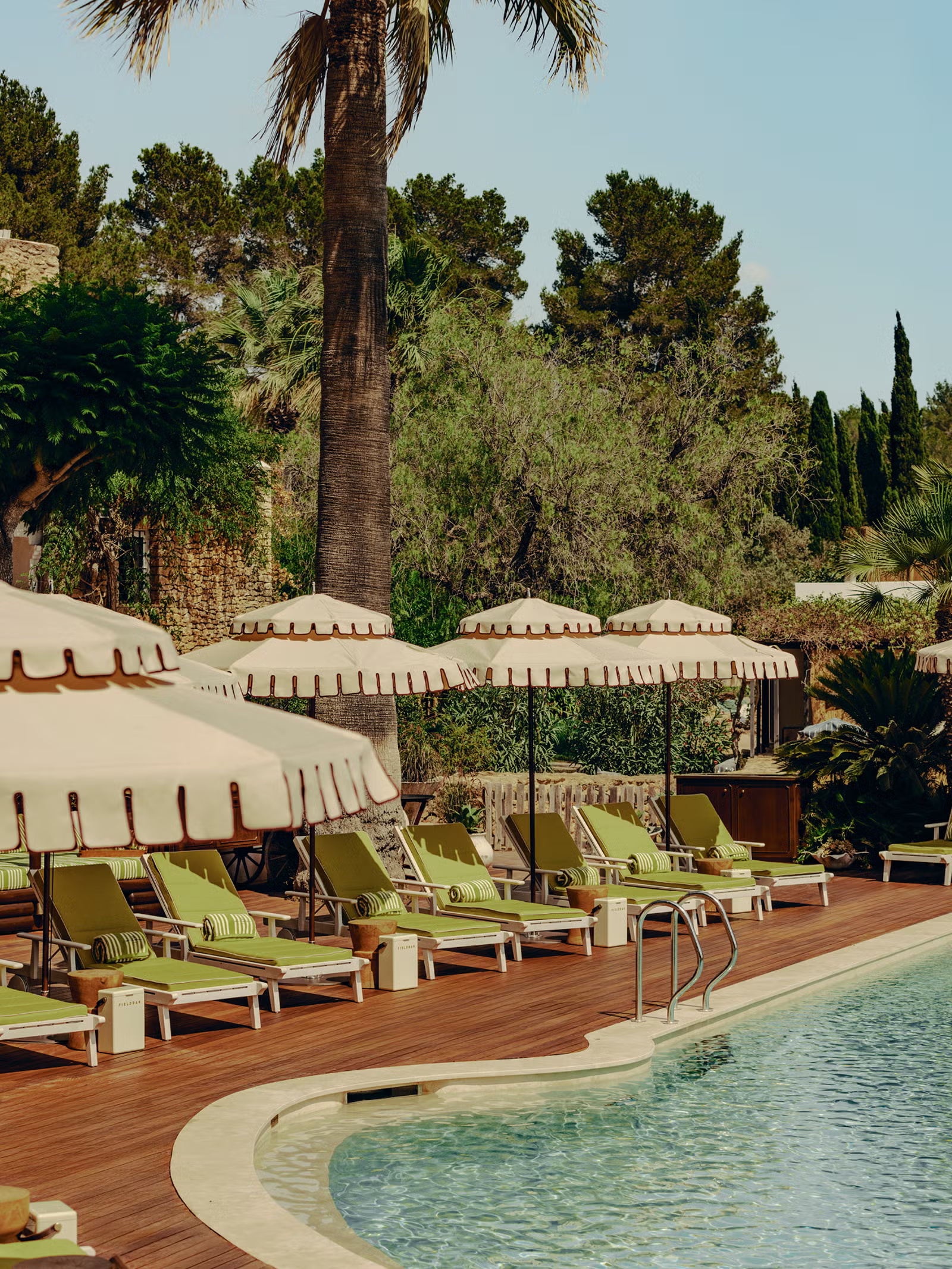
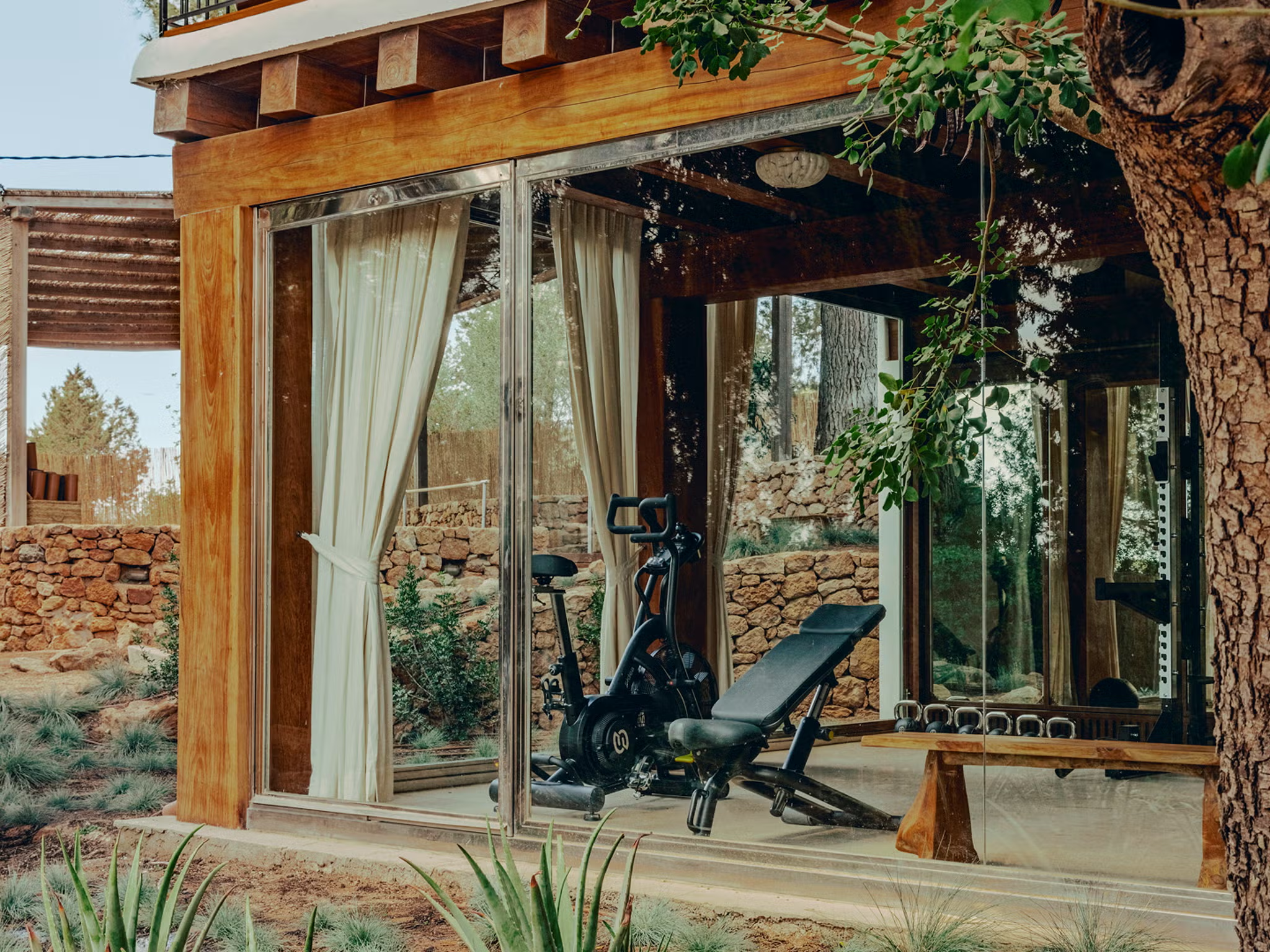
Six Senses Douro Valley blends spa therapies, vineyard views, seasonal cuisine, and holistic wellness. Quinta da Comporta in Portugal offers rice fields, organic ingredients, and minimalist design for a serene escape, while Soho House Ibiza is set to debut a wellness-focused escape combining island energy with holistic programming.



8. Accessible High-End Wellness Closer to Home
Canyon Ranch Austin — with 600 acres, a 40,000-square-foot spa, and extensive integrated programming — is a prime example of world-class wellness becoming more accessible for U.S. travelers.
9. Multi-Dimensional Retreats that Support Real Life
SHA Wellness in Spain blends advanced health diagnostics with natural therapies, movement practices, and tailored nutrition for a fully integrated approach to wellness. She She Retreats in Europe focus on emotional wellness, movement, and spiritual grounding in small, intimate settings.
Wildly Well Retreats will also offer immersive experiences in 2026 across Costa Rica, Puglia, Mallorca, Bali, Canada, Portugal, Sardinia, and more. Our co-founder and wellness expert of ten years, Codi Jane — a sound healer and breathwork facilitator who has hosted retreats in Mallorca, Tuscany, Peru, and British Columbia, and contributed sound healing on apps like the Chopra App and Open App — will co-host the Sardinia retreat (Sept 25–30, 2026), immersing guests in wild coastal hikes, dolphin spotting, ancient village exploration, and the serene rhythm of Sardinian life.


10. Inclusivity, Personalization, and Wellness for Every Woman
Modern wellness is inclusive, offering women experiences that honor age, body type, life stage, and personal goals. From hormonal support to emotional clarity and creative renewal, programs now meet women exactly where they are.
Where Will Your Reset Begin?
From desert sanctuaries and vineyard retreats to women-centered programming, social wellness clubs, and luxury urban oases, 2026 offers opportunities for deep, intentional, and transformational wellness travel. By reclaiming time for rest, reflection, and holistic self-care, women are not only transforming themselves — they are reshaping families, communities, and the future of travel.
Wellness is no longer a luxury. It is a tool for resilience, clarity, and long-term wellbeing. For women, these destinations offer something even more essential: a place to reconnect with who you are when the world finally gets quiet.


One Response